theguardian.com
@theguardian Sun, 04 Jun 2023 05:01:04

The Observer view on Uganda’s anti-gay laws: grotesque, legalised bigotry | Observer editorial
Yoweri Museveni has introduced the death penalty for homosexual acts, but his legislation threatens more than the people it demonises
Uganda is one of the youngest and fastest growing countries in the world. Nearly half of its 45 million-strong population in 2020 were under 14. Roughly 75% were under 30. Total numbers are projected to grow to 141 million by 2065. Against this extraordinarily fecund demographic backdrop, fears expressed by its president, Yoweri Museveni, that homosexuality threatens the “procreation of the human race” appear absurdly and offensively misplaced.
Museveni, 78, cannot be counted among these new Ugandan generations. He has been in charge since 1986, having seized power in a violent coup. In 2005, he agreed to the creation of a multi-party democracy, but his authoritarian grip on the country has never relaxed. Corruption and intimidation of political opponents are rife. Vote-fixing and fraud have marred successive elections, according to the UK, EU and US.
Continue reading... read moreOther Headlines
theguardian.com
@theguardian Wed, 04 Nov 2026 06:00:25

Can an African feminist have a white wedding? It's complicated | Patience Akumu
I wanted to be a beacon of black feminist love; my friends and family teased me for being a selloutWe had been together 20 years, had two children and had a customary marriage with our village sub-county two years ago without any real plans for a church wedding. So we called our second ceremony a celebration of love and not a wedding. How else would a self-professed African feminist survive being the centre of a colonial and Abrahamic religious ceremony that also manages to reinforce the most male-centred aspects of African culture?Our invitations came directly from me and my partner Mark, not – as is traditional – from our families, and in the form of a playful gif featuring the song Love Potion from the South African group Mafikizolo, a reminder that this was a wedding on our terms. I thought they screamed "liberated African feminist". But when my cousin Moses received his, he asked, "So, the patriarchy has won?" Continue reading...
read moretheguardian.com
@theguardian Mon, 02 Nov 2026 10:00:37

'They assume the man next to me is the owner': four women doing business in Africa in their own way
From feeding schoolchildren to recycling tyres, these entrepreneurs are challenging stereotypes while solving social and environmental problemsAfrica is thought to have a higher proportion of female entrepreneurs than any other continent and yet many still struggle to access financing. Four business leaders from Nigeria, Uganda, Kenya and Malawi tell us about the inspiration behind their success – and the challenges women still face. Continue reading...
read moretheguardian.com
@theguardian Wed, 28 Oct 2026 09:37:49
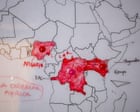
Africa's 'unprecedented' Ebola outbreak could reach UK, says top health official
Jean Kaseya, of the Africa CDC, warns of the illness spreading like Covid unless more funding is secured to increase preparedness and possible treatmentThe "unprecedented" spread of the Ebola outbreak means it could reach the UK and other countries, according to one of Africa's top health officials.As the current outbreak reached 10,000 cases, with almost 5,000 deaths, Dr Jean Kaseya, director general of the Africa Centres for Disease Control and Prevention (CDC), compared the outbreak to the Covid pandemic, which first took hold in China before spreading to countries across the world, claiming millions of lives, and ravaging health systems and economies. Continue reading...
read moretheguardian.com
@theguardian Fri, 23 Oct 2026 13:57:11
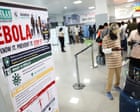
Mystery over source of Ebola infection in Nigeria fuels concern about spread of virus
Switzerland says patient is wife of Swiss diplomat and believed to have contracted virus while travelling in UgandaHealth officials across Africa are racing to determine how Nigeria's first Ebola patient in more than a decade became infected, amid fears the outbreak could spread further after reaching a fourth African country.The Swiss foreign ministry said on Friday the patient in Nigeria, the Ugandan-born wife of a Swiss diplomat based in Abuja, had not travelled to the Democratic Republic of Congo, where the outbreak was first detected in mid-May before spreading to Uganda, Kenya and now Nigeria. The woman was believed to have contracted Ebola while travelling with her husband in Uganda, the ministry added. Continue reading...
read moretheguardian.com
@theguardian Wed, 14 Oct 2026 10:00:01

From black soldier flies to mealworms: farming insects for food, fodder and fertiliser in Uganda
Cultivating the nutritious bugs means families can raise livestock and enrich their own food, while lowering pressures on the landA few minutes' walk from his home in the Kyaka II refugee settlement, Kanane Bikanyale feeds black soldier fly larvae to chickens in a coop above a fishpond. The larvae disappear in a scrum of chickens. Nearby, more larvae grow in modified jerrycans, while adult flies are kept in netted boxes.Bikanyale kept chickens before he fled to Uganda from the Democratic Republic of the Congo (DRC). But the cost of conventional feed and shortages of ingredients made them increasingly difficult to raise – a widespread pressure for millions of smallholder farmers whose margins are tight.Kanane Bikanyale tends to his black soldier fly larvae in a rearing unit in the Kyaka II refugee camp in Uganda Continue reading...
read moretheguardian.com
@theguardian Sun, 11 Oct 2026 11:00:24
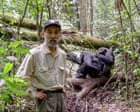
'I didn't want to write about this': the man who first saw chimps waging civil war
John Mitani spent years studying a huge community of chimpanzees in Uganda. But then things took a dark turn – and his findings stunned the scientific worldJohn Mitani can still remember the first time he set foot in Uganda's Kibale national park. The old-growth east African rainforest enveloped him, its canopy stretching to heights of 40 metres. Fruit trees bowed under the weight of African star apples and bountiful Ficus mucuso figs. And then there were the chimpanzees. Furry black blobs darted through the jungle, their raucous calls often deafening.It was the summer of 1995, and Mitani, a primatologist from northern California, had just come from working with the chimps living in the Mahale mountains of Tanzania. At the time, Mahale was home to the largest known population of chimps, with about 100 individuals. But there were rumours that this section of Kibale – only accessible via a 12-hour drive from the capital, Kampala – might host an even more unusual abundance of apes. Continue reading...
read moretheguardian.com
@theguardian Sun, 04 Oct 2026 07:04:58
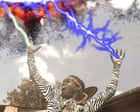
Wakaliga Uganda review – a blistering superhero movie with hardboiled cops and a nefarious 'girl with a voluminous bum'
Chisenhale Gallery, LondonA young man possessed by the spirit of a mythical Buganda warrior leads the film-making collective's explosive new diatribe against the theft of cultural artefacts – with the help of a 'video joker' Wakaliga Uganda makes action movies with a cast from the Kampala streets, props built out of scrap, desktop special effects and a bucketload of wit. The studio's breakout hit, Who Killed Captain Alex?, followed a martial arts master on a mission for revenge against the mafiosi who killed his brother, a Ugandan military officer sent to clean up the capital's slums. Featuring helicopter gunships, shootouts and kung fu showdowns, and reportedly made for a few hundred dollars, this blockbuster bears little relation to the films you might expect to find in an art gallery (setting aside the shoestring budgets). Which is to say, it is very good fun to watch.Founded by Harriet Nakasujja and Isaac Nabwana, the film studio also known as Wakaliwood came to the attention of the wider art world in 2017 when it was included in the German art festival Documenta. That influential show was part of a general turn towards the culture being made by independent collectives outside Europe and North America, especially those that pioneer unconventional ways to fund their activities (indicatively, the studio used the money to install fibre-optic cables in its neighbourhood). Its entry on to the international art circuit brought higher production value and – if the new commission now showing at the Chisenhale is any guide – a subtle shift in direction and purpose. Continue reading...
read moretheguardian.com
@theguardian Mon, 14 Sep 2026 15:03:41
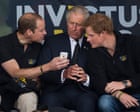
Uganda reverses Invictus Games withdrawal after reassurance from King Charles
Military chief had pulled country out over 'Harry-Meghan nonsense' but U-turned after clarification from the palaceUganda has U-turned on its decision to withdraw from the Duke of Sussex's Invictus Games after the country's military chief said he had been reassured by King Charles that there was "no problem" with its participation.Last week, Gen Muhoozi Kainerugaba, the eldest son of the Ugandan president, Yoweri Museveni, made the surprise announcement the country would not participate in the games in a post on X. He said he was motivated by his respect for the king amid division over the "Harry-Meghan nonsense". Continue reading...
read moretheguardian.com
@theguardian Sat, 12 Sep 2026 15:09:05
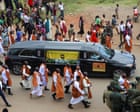
Burial of King Oyo takes place in Uganda as news anchor prepares for throne
Royal guards carry casket through streets of Fort Portal amid row over appointment of Edward Rukidi KijanangomaUganda's King Oyo Nyimba Kabamba Iguru Rukidi IV, long the world's youngest monarch, has been buried among the tombs of his royal forebears as his Tooro kingdom looked to put a bitter succession battle behind it.Oyo's appointed successor, the news anchor Edward Rukidi Kijanangoma, cast nine coffee berries into the grave at the Karambi Royal Tombs, marking the formal handover of power in the western Ugandan kingdom. Continue reading...
read moretheguardian.com
@theguardian Thu, 10 Sep 2026 15:53:29
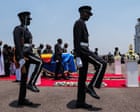
TV presenter v secret son: the succession dispute engulfing a Ugandan kingdom
Family of late King Oyo Nyimba Kabamba Iguru Rukidi IV reveal son's existence as they reject committee's choice of cousin as new monarchA traditional Ugandan kingdom has become engulfed in a bitter succession dispute after the family of a king who recently died rejected the selection of a television news anchor as his successor.King Oyo Nyimba Kabamba Iguru Rukidi IV, who became the world's youngest reigning monarch when he took the throne in the kingdom of Tooro in 1995 at the age of three, died on 27 August in the US, where he was receiving cancer treatment. Continue reading...
read moretheguardian.com
@theguardian Wed, 09 Sep 2026 17:51:59
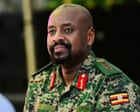
Uganda to withdraw from Invictus Games 'out of respect for King Charles', says military chief
Gen Muhoozi Kainerugaba announces decision to pull out of event in post on X, citing tensions over 'Harry-Meghan nonsense'Uganda is withdrawing from the Duke of Sussex's Invictus Games, the country's military chief said, out of respect for King Charles amid division over the "Harry-Meghan nonsense".Gen Muhoozi Kainerugaba, son of the Ugandan president, made the surprise announcement in a post on X on Wednesday. Continue reading...
read moretheguardian.com
@theguardian Wed, 26 Aug 2026 14:00:15
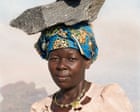
A Ugandan quarry worker carrying rocks on her head: Dan Nelken's best photograph
'Janet had eight children. Her husband drove a boda-boda taxi, but had lost a leg – so she had been working in her local quarry for 10 years. "I am now the husband in this home," she said'In 2017, my wife, Adele Brown, was invited to spend three weeks at an NGO in Gulu, Uganda, teaching critical thinking skills to blind high school-age students. I was asked along to document the organisation's activities. I became fascinated by the town's main market, where vendors sold goods such as used clothes, fruit and firewood. I asked the Ugandan teachers how I might approach someone to take their portrait. They suggested I offer a modest "model fee" after seeking permission.One of the students – Emmanuel (Emma) – wanted to assist me. We would visit the market together. When I saw a vendor I wanted to photograph, Emma would approach and seek their consent. Most agreed, but after returning home to New York, I looked at the results and was disappointed. As with other well-intentioned projects, I thought that was the end of it. Continue reading...
read moretheguardian.com
@theguardian Mon, 24 Aug 2026 11:54:08
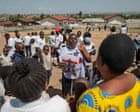
After 100 days of the deadliest Ebola outbreak, it can be stopped. Here's how | Jean Kaseya and Tedros Adhanom Ghebreyesus
Ebola is a disease that spreads through communities, so we need to listen to communities if we want to halt its spreadEach time we travel to the Democratic Republic of the Congo (DRC), we go first to listen. In Bunia, we have met dozens of community representatives: survivors, women, young people, local organisations, health workers and leaders from affected areas.Their message was direct: involve us. We know our communities. We know where families seek care, how information moves and why trust is breaking down. Give us the means to help drive the response. They were right. Continue reading...
read moretheguardian.com
@theguardian Fri, 21 Aug 2026 09:02:22
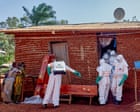
Ebola outbreak: five big questions
On 23 August, it will be 100 days since the Bundibugyo strain was first reported. How did it became the DRC's most deadly outbreak and what must be done to stop it becoming the world's largest?Almost 100 days ago, Africa's public health watchdog reported an outbreak of Ebola in the Democratic Republic of the Congo.There have now been almost 5,000 cases and more than 2,000 deaths since 15 May, making this Ebola outbreak the biggest and most deadly in the DRC's history. Continue reading...
read moretheguardian.com
@theguardian Wed, 19 Aug 2026 17:59:29
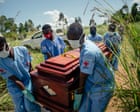
The Guardian view on the Ebola outbreak in the DRC: a case study in why international aid matters | Editorial
The Trump administration's 'America first' approach has contributed to the scale of the crisis now unfolding in one of the world's poorest countriesFor months health experts have warned that the scale of the Ebola outbreak in the Democratic Republic of the Congo (DRC) could surpass the one that swept west Africa in 2014-16. This week, the authorities in the DRC announced that a grim milestone has already been passed: at least 2,325 people have died from the virus, making it the deadliest of the country's 17outbreaks and the fastest-growing in history.There is no effective vaccine against Bundibugyo – a rare strain of the virus that spread fatally undetected during the spring, often being misdiagnosed as malaria or typhoid. In contrast to neighbouring Uganda, which succeeded in eliminating an outbreak, multiple factors are combining to let the disease rip through the DRC. The worst-affected region is contested by armed groups, and a context of population displacement and chronic insecurity has made monitoring and surveillance more difficult. Ebola treatment centres have been attacked as a result of misinformation and community distrust. Continue reading...
read moreRight Column Content